← Back to guides

Trouble sleeping

When You Cannot Fall Asleep: The 20-Minute Rule and What CBT-I Is

Lying awake and watching the clock is stressful. Here is the get-up-and-reset approach sleep specialists describe, and a plain-English look at CBT-I.

Updated 6 min read

This article is for general information and isn't medical advice.

Almost everyone has nights when sleep will not come. You are tired, the room is dark, and yet your mind is busy. The natural instinct is to stay put and try harder. Sleep specialists tend to suggest the opposite, for a reason that has to do with how the brain learns associations.

Why staying in bed can backfire

If you spend long stretches in bed awake, frustrated or worried, your brain can start to link the bed with those feelings instead of with sleep. Over time, getting into bed may start to trigger alertness. The approach designed to counter this is called stimulus control, and it is one of the core components of cognitive behavioral therapy for insomnia.

The 20-minute rule, in practice

The American Academy of Sleep Medicine (AASM) puts it simply: if you are unable to fall or stay asleep within about 20 minutes, get up, try a quiet activity, and do not return to bed until you feel tired. The AASM also suggests keeping a regular schedule but not going to bed until you are sleepy, and using your bed only for sleeping, sex or recovering from illness. The Sleep Foundation's description of stimulus control gives a slightly shorter window, getting out of bed if you are lying awake for more than about 10 minutes, so the exact number is not magic. You do not need to watch the clock. An estimate is enough.

  • Get up and go to another room if you can, with low, warm lighting.
  • Choose something quiet and boring: gentle stretching, reading a paper book, folding laundry or listening to calm music at low volume.
  • Avoid bright screens, work and anything that gets you emotionally worked up.
  • Return to bed only when you feel sleepy, and repeat the process if needed.
  • Keep your wake-up time the same the next morning, even after a rough night, and avoid long naps if you can.

This can feel counterintuitive, especially on a cold night. Many people find it easier to prepare a cozy spot with a blanket and a dim lamp ahead of time.

If your mind is racing

The AASM suggests that people who find themselves always worrying at bedtime set aside a specific time during the day to write down their worries. Doing this earlier in the evening, away from the bed, can help keep it from following you under the covers. If a thought pops up in the night, jot it on a notepad and let it wait until morning.

What CBT-I is

CBT-I stands for cognitive behavioral therapy for insomnia. It is a structured program that targets the thoughts and behaviors that keep sleep difficulties going, and it does not rely on medication. The Sleep Foundation describes several typical components.

  • Stimulus control: the get-up-and-reset approach above, along with using the bed mainly for sleep and keeping a consistent wake time.
  • Sleep restriction: using a sleep diary to limit time in bed to something closer to the sleep you actually get, then gradually expanding it. This can be demanding at first, so many people prefer to do it with a trained professional.
  • Cognitive work: noticing and challenging unhelpful beliefs about sleep, such as worrying that one bad night will ruin everything.
  • Relaxation and education: breathing or muscle relaxation methods, plus information about how sleep works and which habits help.

Why clinicians point to it first

The Sleep Foundation describes CBT-I as a first-line treatment for chronic insomnia and attributes that recommendation for adult patients to the American College of Physicians' 2016 clinical practice guideline. The NIH's National Heart, Lung, and Blood Institute (NHLBI) lists CBT-I among its recommended treatments for insomnia alongside healthy lifestyle habits and, in some cases, medicines. The NIH's National Center for Complementary and Integrative Health (NCCIH) describes CBT-I as the most strongly recommended insomnia treatment and says it is generally considered safe.

That does not mean it works for everyone, and it often takes time and effort. The Sleep Foundation notes that it may take time to work. CBT-I can be delivered in different ways, including with a trained therapist and through structured programs. A clinician can help you decide which format fits your situation.

When to get help

The NHLBI describes chronic insomnia as occurring at least three nights a week for more than three months and not being fully explained by another health problem. If you have been struggling for that long, or if poor sleep is affecting your daily life, it is reasonable to ask a doctor about evaluation and about CBT-I. Other conditions such as sleep apnea, restless legs or low mood can also interfere with sleep, and a clinician can help sort out what is going on.

Our guide on when to talk to a doctor about sleep lists signs that deserve attention.

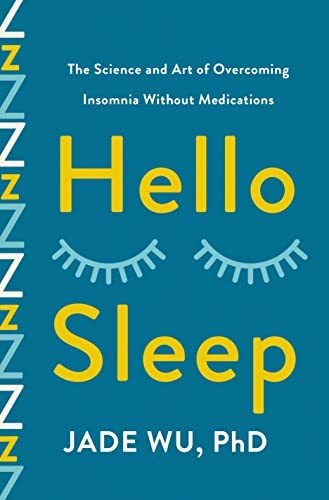
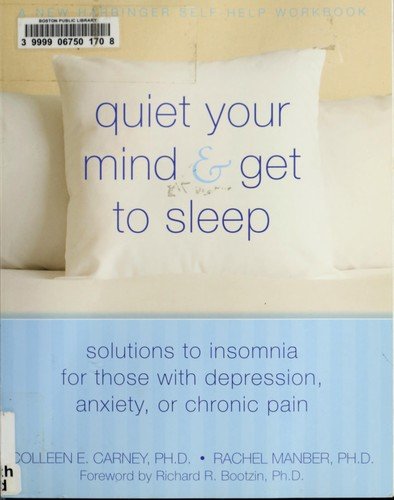
Three books in the Moonlight Guidex library are built around CBT-I techniques. Hello Sleep by Jade Wu, a behavioral sleep medicine specialist, explains how insomnia develops and how cognitive behavioral approaches address it, with practical exercises. Say Good Night to Insomnia by Gregg Jacobs lays out a six-week program based on cognitive behavioral techniques and discusses working with a doctor on sleep medication. Quiet Your Mind and Get to Sleep by Colleen Carney and Rachel Manber presents CBT-I strategies in a workbook format for readers whose sleep problems overlap with depression, anxiety or chronic pain. These books are educational and are not a substitute for working with a clinician.

Books related to this guide

Paid links: if you buy a book through the links below, we earn a commission. As an Amazon Associate we earn from qualifying purchases. It does not change the price you pay.

  • Trouble sleeping

    Say Good Night to Insomnia

    by Gregg D. Jacobs · 2009

    A structured six-week program based on cognitive behavioral therapy.

    Harvard-affiliated sleep researcher Gregg Jacobs lays out a week-by-week plan built on cognitive behavioral techniques for insomnia. Readers learn to adjust sleep habits, change unhelpful thoughts about sleep and use relaxation methods, and the book discusses working with a doctor on sleep medication.

    Best for: Adults with ongoing trouble falling or staying asleep

    • Kindle
    • Paperback
    • Hardcover
    • Audiobook
    View on Amazon
  • Cover of Quiet Your Mind and Get to Sleep by Colleen E. Carney, Rachel Manber
    Trouble sleeping

    Quiet Your Mind and Get to Sleep

    by Colleen E. Carney, Rachel Manber · 2009

    CBT-I techniques adapted for people also dealing with mood or pain.

    Two clinical psychologists who specialize in sleep present cognitive behavioral strategies for insomnia in a workbook format. The exercises are tailored for readers whose sleep problems overlap with depression, anxiety or chronic pain.

    Best for: People whose sleep issues overlap with anxiety, low mood or pain

    • Kindle
    • Paperback
    • Audiobook
    View on Amazon

Sources

Moonlight Guidex provides general information only and is not medical advice; talk with your doctor about any health concerns.

← Back to all guides